Someone once said, “beauty is in the eye of the beholder.” This sublime statement has become a reality in the rare coin business. Toned coins are now extremely collectible and highly sought after. The demand for toned coins is now across the board for nearly every denomination. Prices continue to increase as the demand for them becomes stoked by social media exposure. It has become one of the most fascinating segments of numismatics today.
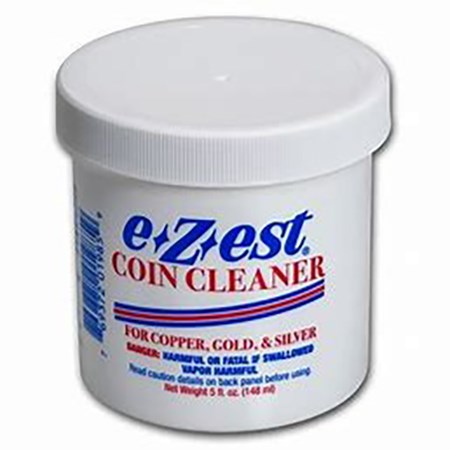
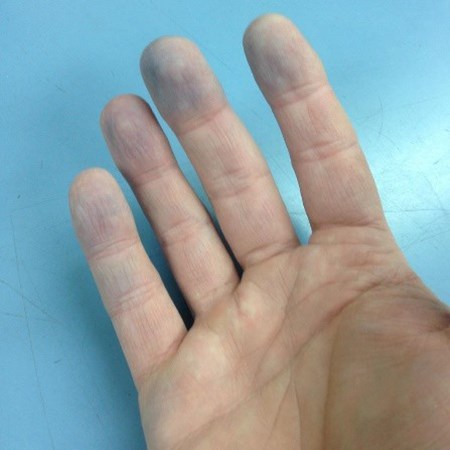
When I first bought and sold rare coins decades ago, toned coins were certainly a curiosity, but the demand for them was lukewarm at best. As a matter of fact, most collectors wanted their rare coins frosty white. Any coin with toning was soon slated for a bath in Jewel Luster, which was the coin dip of choice for most collectors. Jewel Luster (e*Z*est) has a mild blue dye added to it to discourage people from exposing their skin to the chemicals. Believe me, there was no shortage of Smurf-fingered coin dealers in the 1970s and 1980s.
 |
 |
Much has changed over the years. Collectors now have a deep appreciation for coins with attractive, original toning. What constitutes “attractive” is the question that many have different opinions about.
I have mentioned in previous articles that silver coins come in three basic looks. About 40 to 50% of the vintage coins (over 50 years old) seen on the market today are frosty white or mostly so. These are coins that have probably been conserved at one time or were found in rolls or bags and not exposed to sulfur or other contaminants. A large number of Morgan Silver Dollars that are found are seen this way.
Another 40 to 50% of the silver coins have toning that is not considered attractive. Many of the coins have toning that ranges from light brown to an almost black appearance. In general, many of these are the coins that sell for significant discounts when offered for purchase. The coins may technically grade quite high, but many collectors do not like the aesthetic appeal of the pieces.
You might be wondering that if these coins sell for a discount because of the unattractive toning, why does someone not have them conserved? That is a great question! The problem is that not all coins are candidates for dipping or some other form of conservation. Many coins with deep or uneven toning will look terrible if cleaned. That is why conservation should be left to the hands of experts. Using silver dip can be a dangerous option for toned silver coins of high value. The results are far from consistent, and many great coins have been ruined in an attempt to make them frosty white.
 |
|
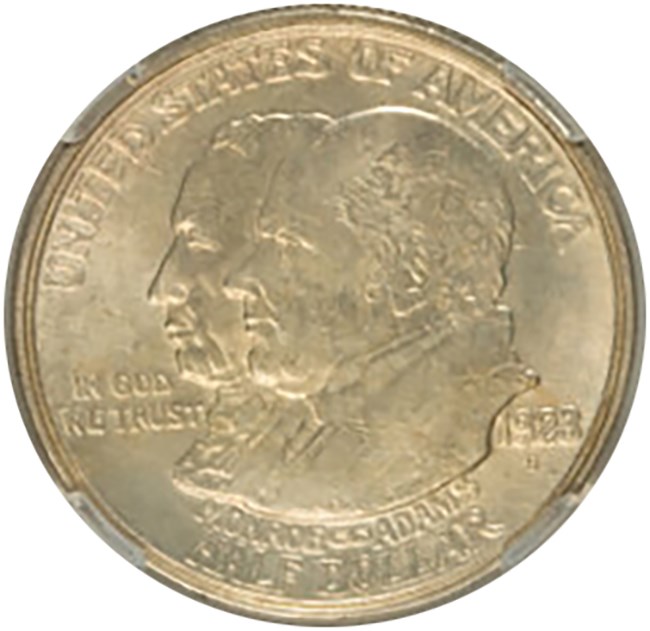
| 1923-S Monroe Half Dollar | |
I still have a 1923 Monroe Half Dollar (see above) that I purchased in the 1980s for around $3,000 that was completely ruined when I dipped the coin. I keep the coin as a reminder of the dangers of trying to restore a coin. Nearly every dealer you will ever meet can relate a similar story. On the flip side, there is always the excitement of dipping an unattractive coin and being left with a sparkling jewel.
Finally, we have the small percentage of coins that are found with what can be deemed as attractive toning. I estimate that less than 10% of the silver coins on the market would fall into this category. As mentioned above, what constitutes attractive toning can be subjective.
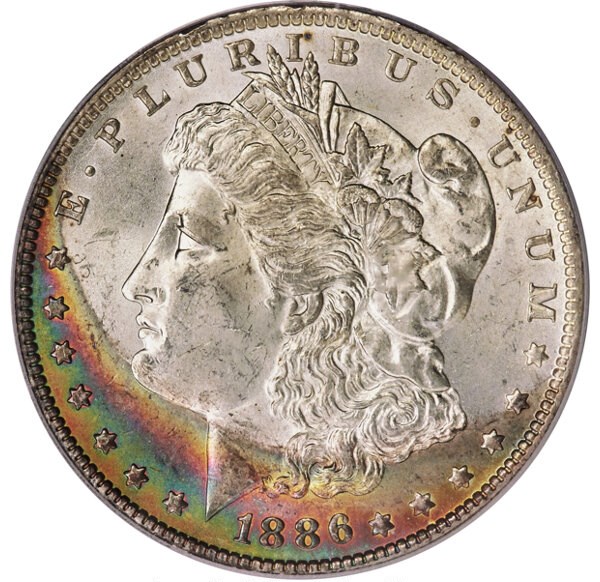
Coins with attractive toning are usually very frosty, with the toning appearing to be layered lightly on the surface of the coin. These coins can have toning that ranges from light brown to almost any color of the spectrum. Quite a few of these attractive coins are also found with partial toning. This means coins that are bright white with splashes of color.
 |
|
| 1886 Morgan Dollar with crescent toning | |
Sometimes coins that had been stored for years in bags will have crescent toning from being partially covered by another coin while being exposed to the toning effects of the bag. These coins are among the most sought after by toning aficionados.
The most active players in the toned coin market today are many of the young collectors and dealers who have just entered the hobby. They love the fact that pricing is subjective and there are really no price guides. There are several Facebook groups devoted to this corner of the market. The coins are ideal for the photo-centric nature of Instagram. There are also several excellent podcasts discussing how to collect toned coins.
 |
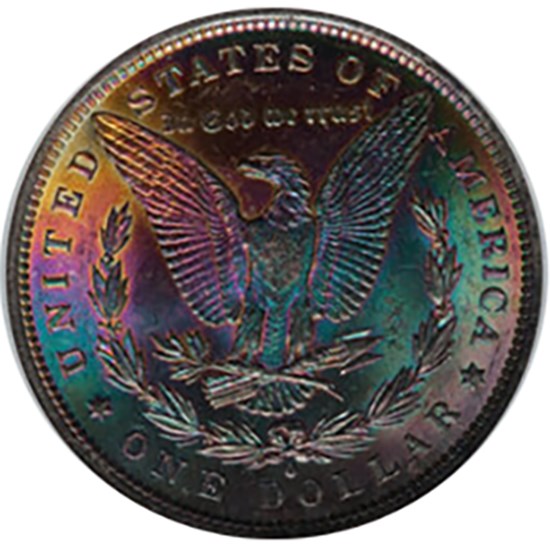 |
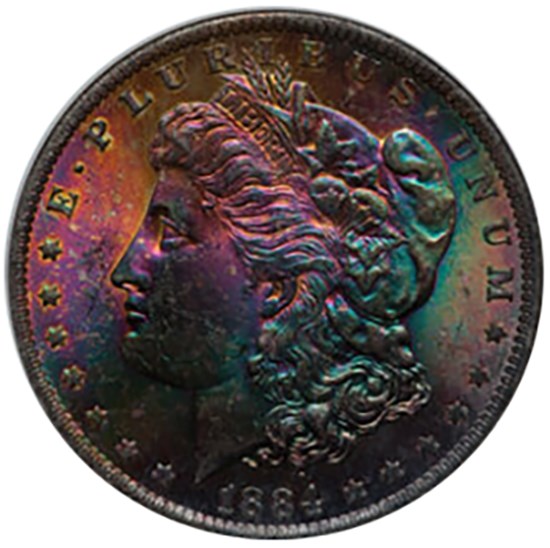
| 1884-O Morgan Dollar | |
Morgan Silver Dollars are probably the most popular issues for collectors of toned coins. The premium paid for these coins can sometimes seem to defy logic. Several years ago, I consigned an 1884-O Morgan Silver Dollar graded NGC MS 64 to auction. The coin, as can be seen from the pictures above, displays beautiful toning on both the obverse and reverse. Apparently, this is a very rare combination. An average 1884-O Morgan Silver Dollar is worth about $100 in MS 64. This coin sold for nearly $4,000 several years ago.
Classic commemorative Half Dollars (those struck from 1892 to 1954) are also extremely popular with the toned collector crowd. There have been auction records in recent years that seemed totally impossible. It seems that collectors of toned coins are sometimes willing to engage in mortal combat to obtain the coins they feel are worthy of their collection. You can throw out the price guides when these coins cross the auction block.
 |
|
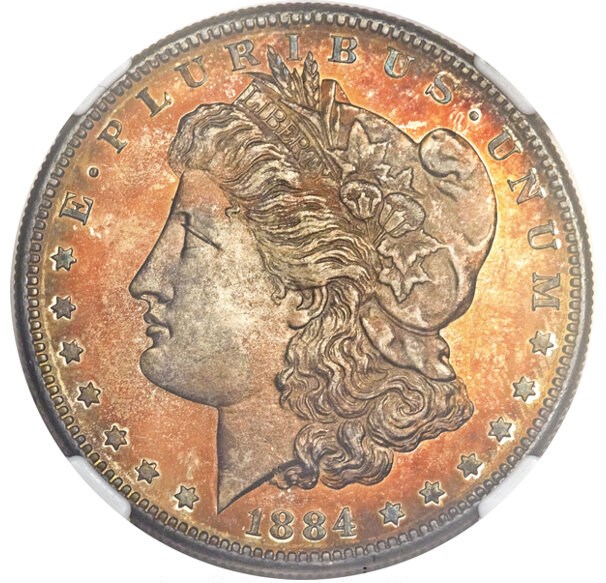
| 1884-S Morgan Dollar graded NGC UNC Details – Artificial Toning |
|
The increased demand for toned coins has sadly created a dark side for the hobby. Artificial toning is one of the trickiest parts of numismatics. Many cannot even agree on what artificial toning really is. Anyone who has ever submitted coins to a grading service has probably gotten a coin back that was ungraded because of “questionable toning.”
Coins have been artificially toned since the beginning of numismatics. In the late 1800s, a prominent numismatist died when cleaning Large Cents. He accidently took a sip of cyanide instead of ginger ale while working on his collection.
Getting a coin back from the grading services as “questionable toning” can be frustrating for anyone. It is understandable, in my opinion, as the grading services are constantly assaulted with artificially enhanced coins. It is their job to protect the final end user of their products. No one wants to own a coin for years and then find out they have an inferior product when it is time to sell.
As mentioned above, collecting toned coins is a matter of taste. In general, collectors are now much more willing to pay higher prices for coins with great eye appeal. This mantra is taken to extremes when a truly beautiful coin comes to market. I have stated before that if I come across a stunning coin, I almost always place the coin in auction. It seems that buyers for these coins sometimes have a better imagination than I do.
Eye appeal has become a very important element for pricing rare coins. Toning is just one of the important factors that must be considered.
Want to see more articles like this? Subscribe to the free NGC Weekly Market Report.