
My first chore each day is to plow through emails received overnight. This morning’s routine consists of sorting through spam messages and inquiries about rare coins. Nearly all of the coin emails are basic questions about possible mint errors or something they have encountered that seems unusual. We are sometimes offered important numismatic material, but that is by no means the norm. I try to answer as many emails as possible, but the job seems to get bigger every day.
What keeps me motivated are the rare occasions when something truly amazing comes my way. This happened a few years ago, when a random email resulted in my handling of the Kentucky Gold Hoard of more than 800 Civil War-era gold coins. The possibility of a great numismatic discovery is what truly motivates me at this stage of my career.
One thing is certain; there are many more numismatic discoveries out there waiting to unfold. Just a few days ago, construction workers in Belgium found over $10 million in gold bars and coinage hidden in the remains of an old brewery. You never know what great numismatic discovery will be made next.
The following are several numismatic items that could surface and would be worth millions to the lucky finder (images generated by AI where indicated):
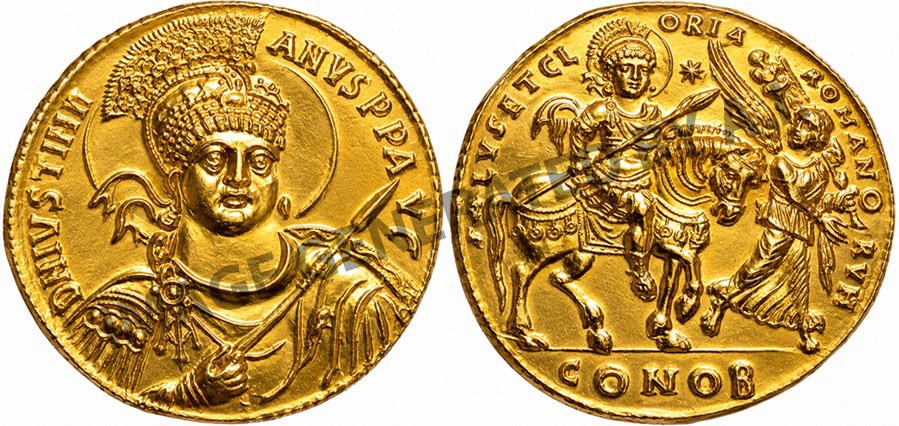
A.D. 527-565 Emperor Justinian I Gold Medallion
 |
|
| Image generated by AI | |
In 1831, the Bibliothèque Nationale de France (then the Royal Library) experienced a nighttime burglary. The thieves broke into the museum and stole more than 2,000 ancient gold pieces, including a massive gold medallion of Emperor Justinian I from around A.D. 527 to 565. The piece had been discovered in 1751.
Today, only an electrotype copy of the original is known to exist. It was reported in contemporary accounts of the robbery that most of the looted treasure had been melted by the thieves. This is what many modern observers think happened to the French Crown Jewels that were stolen from the Louvre Museum in 2025. If the Justinian I Gold Medallion were to be found, it would easily sell for over $10 million.
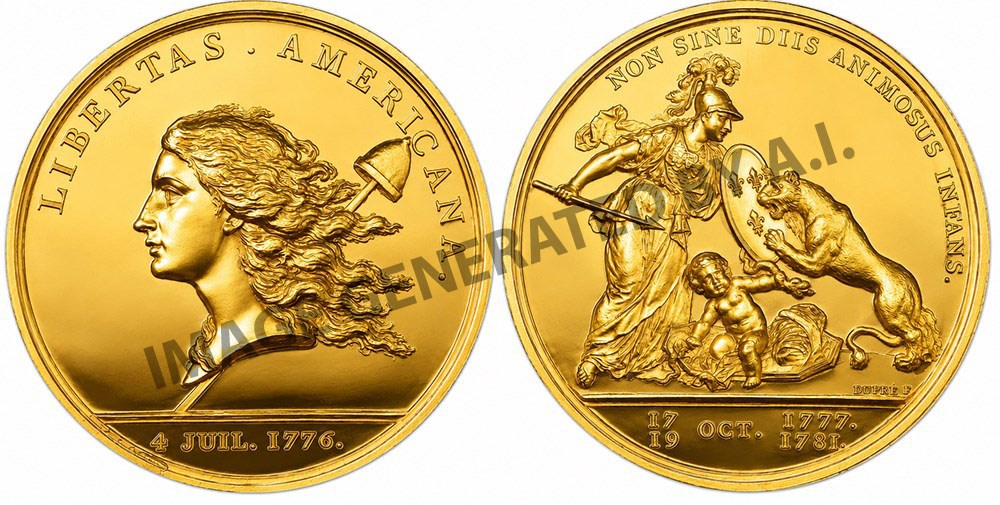
1781 Libertas Americana Medal in Gold
 |
|
| Image generated by AI | |
One of the most famous numismatic items celebrating the American Revolution was actually made in France. Benjamin Franklin commissioned the medal while serving as US Minister to France in 1781. Franklin was personally involved with the design and worked with engraver Augustin Dupre, one of the great medalists of the time. The obverse shows a youthful figure of Liberty, with wild, flowing hair. The reverse is ripe with symbolism, with an infant Hercules (representing the newly created United States) strangling two serpents. Minerva (France) shields him from Britain (the leopard) lunging at him.
The 1781 Libertas Americana medal is one of the most beautiful numismatic creations of the 18th century. Franklin had examples produced in silver and copper as diplomatic gifts. Today, these are highly collectible, with silver examples selling for six-figure prices.
Reportedly, the 1781 Libertas Americana medal was also struck in gold for the French Royal Family. None are known today, and any that were made fell victim to the looting and destruction during the French Revolution that unfolded in the 1790s. If an original gold example of the 1781 Libertas Americana medal were found, it could bring more than $10 million.
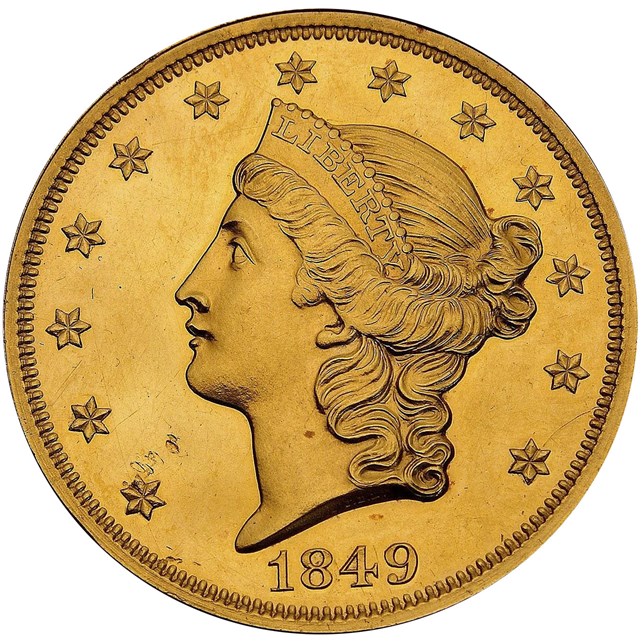
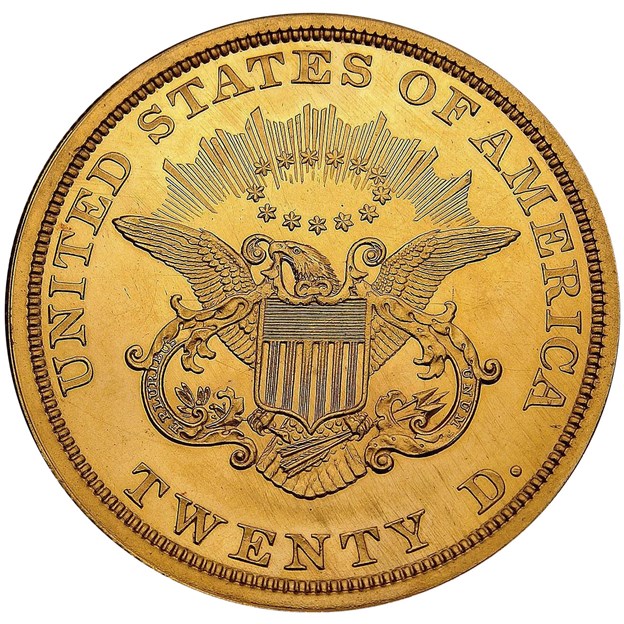
1849 Double Eagle
 |
 |
| Images courtesy of the Smithsonian’s National Numismatic Collection. | |
The 1849 Double Eagle is one of the great rarities of US coinage. Following the discovery of gold in California in 1848, a tremendous flow of the yellow metal made its way to the East Coast. On March 3, 1849, federal legislation to create gold Dollars and Double Eagles was enacted. Chief Engraver James B. Longacre engraved the dies for the new coinage and supervised an attempt to strike the new denomination. The relief of the portrait was too high, and the coins could not be struck properly for mass production.
These delays in production resulted in just a handful of coins being struck late in 1849. All but two 1849 Double Eagles were melted. One was sent to Secretary of the Treasury W.M. Meredith and another to the Mint Cabinet in Philadelphia. The Meredith coin is unknown to numismatists today. The Mint Cabinet example has been transferred to the Smithsonian Institution — one of the most popular attractions of the National Numismatic Collection — and is on display in the rare coin exhibit “The Value of Money” at the Smithsonian’s Museum of American History.
There, the coin is the centerpiece of the “Legendary Coins” case. It is considered by many to be the “ruby slippers” of numismatics. All this being said, the missing Meredith coin could appear one day. Most experts agree that the 1849 Double Eagle is at least as desirable as the 1933 Double Eagle, if not more so. It is certain that the eight-figure mark would be broken, and $25 million is not out of the question.
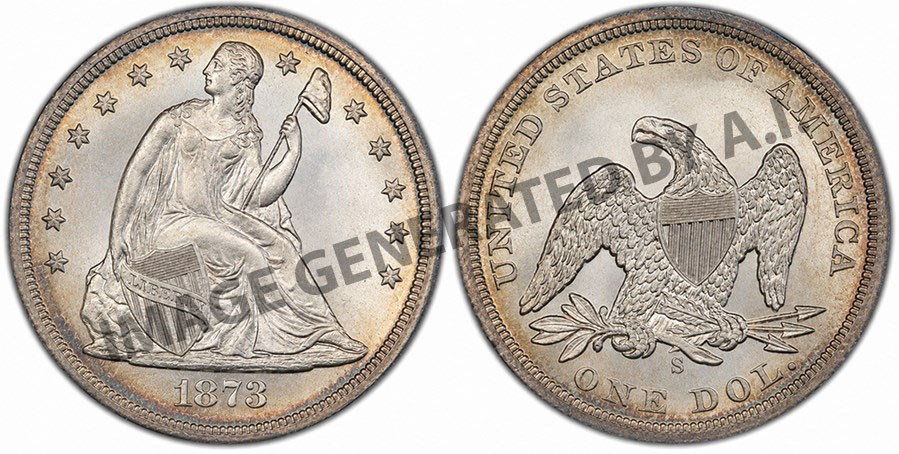
1873-S Liberty Seated Dollar
 |
|
| Image generated by AI | |
The reported mintage for Silver Dollars in 1873 at the San Francisco Mint was just 700 coins. Today, there are no known examples for the last year of Seated Dollar production at the San Francisco Mint. Rumors of examples have surfaced over the decades, but all turned out to be Trade Dollars or altered coins.
The most likely scenario is that all of the 1873-S Seated Liberty Silver Dollars were melted shortly after being produced. It is possible an example could have escaped the melting pot. A previously unknown 1870-S Half Dime appeared in the Chicago area in the 1970s. If a quality example of this mysterious coin were to surface, it would probably sell for well in excess of $10 million.
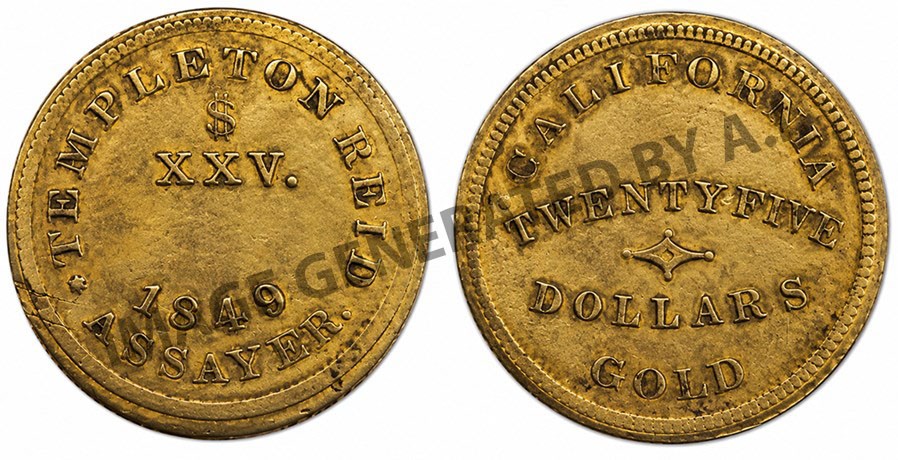
1849 Templeton Reid $25 Gold Coin
 |
|
| Image generated by AI | |
The first private gold coinage of the 19th century was struck by Templeton Reid in Milledgeville, Georgia in 1830. His Georgia gold pieces from this time period are all rare and highly desirable. The later issues of Templeton Reid were probably made from California gold. The California issues were struck in denominations of $10 and $25.
The 1849 Templeton Reid $10 coin is unique and now part of the Smithsonian National Numismatic Collection. The only known example of the $25 Templeton Reid was stolen from the cabinet of the US Mint on August 16, 1858. The coin was never recovered and its whereabouts are unknown to this day. If discovered, an example of this amazing rarity would sell for well over $5 million.
If any of the above coins were to be found, there would undoubtedly be legal battles to establish ownership. That is why many of these mysterious coins probably suffered the fate of being melted by thieves shortly after being pilfered. It would, however, be difficult to prove an example was one of the exact coins stolen so many years later.
A new example of the 1854-S Half Eagle surfaced several years ago. Some speculated that the coin may have been the coin stolen from the Dupont family in the 1960s. No quality photographs existed to prove or disprove the provenance, and the coin entered the market without protest.
I can’t wait for my daily flood of emails tomorrow — maybe one of the above coins will be in my inbox!
Want to see more articles like this? Subscribe to the free NGC Weekly Market Report.